
Your concerns.
Your goals.
A clearer way forward.
Orthopaedic care begins with understanding how pain, injury or restricted movement affects your life. Our approach centres on listening, careful assessment and clear conversations about your options.

Understanding the person behind the concern.
Your symptoms are part of the picture. Your daily routine, responsibilities and expectations also help shape the conversation.
Time to be heard
Share what has changed, what feels difficult and what you hope to return to. Bring your questions and discuss the concerns that matter most to you.
Clarity about your choices
Understand the assessment findings, the options being considered and the reasons behind a recommendation. Ask about alternatives, expected benefits and possible risks.
A plan for the next step
Leave with an understanding of the agreed next steps, whether that means further assessment, treatment, rehabilitation or a follow-up discussion.
From your first questions to follow-up care.
The details differ for every patient. These steps explain how the care conversation is organised.
Listen to your story
Discuss your symptoms, previous injuries or treatment, medical history and the activities that have become difficult.
Assess your concerns
The consultation brings together your history, examination and available reports. Discuss whether any further investigations are needed and what they would help clarify.
Understand the findings
Ask what the assessment suggests, what remains uncertain and how the findings relate to your symptoms and daily function.
Discuss suitable options
Explore the options relevant to your condition, including non-surgical care or surgery when appropriate. Discuss benefits, risks, alternatives and practical considerations.
Agree on the next steps
Clarify the proposed plan, preparation requirements and questions about costs or scheduling before making arrangements with the hospital.
Plan recovery and review
Discuss follow-up, rehabilitation needs and the guidance relevant to returning to your usual activities. Ask whom to contact if you have concerns during treatment.
You are part of the decision. If something is unclear, ask for it to be explained again before agreeing to a treatment plan.
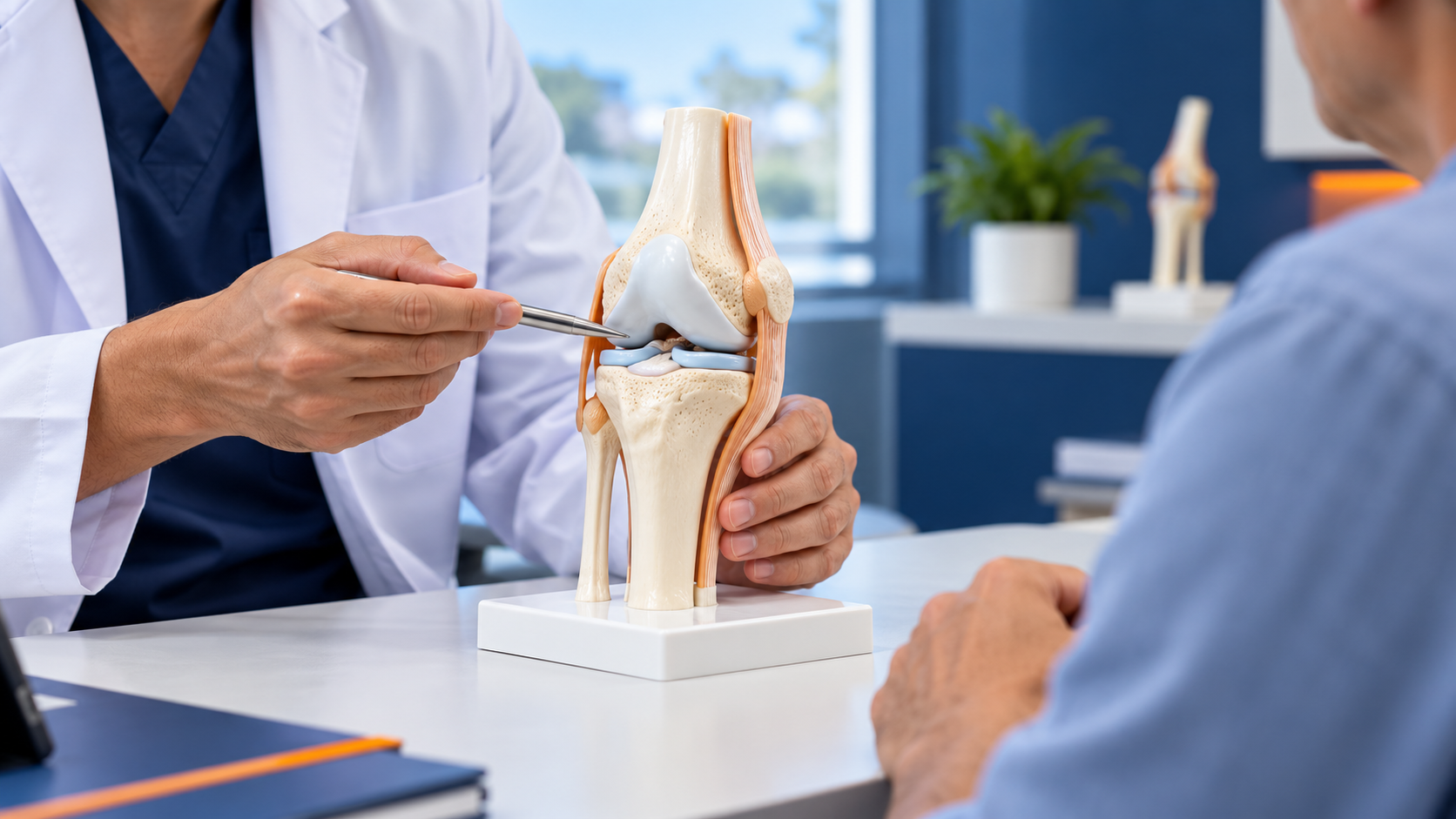
Clear explanations.
Informed decisions.
A treatment discussion should help you understand both the recommendation and what it means for you.
At AAOC, the consultation is an opportunity to connect your concerns with the assessment findings and discuss a practical way forward.
- What is the likely reason for my symptoms?
- What options can we consider, and why?
- What are the expected benefits, risks and limitations?
- What preparation, support and follow-up might I need?

Dr. (Prof.) Arvind Kumar
MS (Ortho), FIAAS (Pune), AITM (Boston)
More than 18 years of experience
Dr. Arvind Kumar brings more than 18 years of orthopaedic experience to consultations for bone, joint and movement-related concerns.
His professional journey combines orthopaedic education with years of clinical experience. Your appointment is an opportunity to discuss your symptoms, review previous reports and explore the next steps in your care.
Whether your concern involves joint discomfort, an injury or recovery planning, bring your questions and explain the activities and goals that matter to you.
Recovery with a clear direction.
Recovery is individual. Your care plan should explain the follow-up and rehabilitation arrangements relevant to your condition.
Discuss your movement goals, the support you may need at home and any questions about returning to work or daily activities. Ask the care team for guidance specific to your treatment.
Keep your follow-up arrangements clear and let the team know if something in the plan is difficult to understand or follow.

A little preparation.
A more useful conversation.
Confirm your appointment and any specific preparation requirements with reception. Bringing relevant information can help you make the most of your consultation.
Your consultation checklist
- Available prescriptions, medical records and previous treatment details.
- Existing X-rays, scan reports or other relevant investigations.
- A list of current medicines and known allergies.
- A brief account of your symptoms and when they started.
- Your questions, daily activity concerns and recovery goals.
No need to arrange new tests solely for this checklist; ask the hospital if any preparation is required.
Before your first appointment.
Does an orthopaedic consultation mean I need surgery?
The purpose of the consultation is to assess your concern and discuss suitable options. Any recommendation for surgery should be explained in relation to your individual condition, alternatives, benefits and risks.
Can I bring previous reports or seek another opinion?
Bring your available reports and treatment history, and let reception know the purpose of your appointment. You can use the consultation to ask questions about an existing diagnosis or proposed treatment.
How will I know what happens after the consultation?
Ask the doctor to explain the agreed next steps, any further assessments, follow-up arrangements and whom to contact with questions.
How can I confirm an appointment?
Call +91 96872 00451 or email doctor@aarviortho.in. An appointment is confirmed when the hospital provides a date and time; clicking a contact button does not reserve a slot.
Let’s talk about your concerns.
Contact Aarvi Advanced Orthopaedic Hospital to enquire about Dr. Arvind Kumar’s consultation schedule and plan your visit.
Please confirm consultation timings and service availability with reception before your visit.
Aarvi Advanced Orthopaedic Hospital
9, Pancham Icon,Opposite Aajwa Water Tank, Beside BOB,
Sardar Estate, Sayaji Park Society,
Vadodara, Gujarat – 390019.
doctor@aarviortho.in
+91 96872 00451